Category: Education Today

Education Today

  • MOOCs mania: a speculative bubble?

    results of a survey by the french Ministry of Education
    Results of a survey (Les usages pédagogiques du numérique) by the French Ministry of Education

    A few days ago, I participated in a workshop at the DLD Festival in Tel Aviv about the “business model of online education” at the invitation of the World Economic Forum. The same day, the French Ministry of Education released the results of a survey that showed that only 5% of French students and less than 20% of their teachers knew precisely what it was about.

    How can you think of a business model for MOOCs when your potential users don’t know what they are about?

    (more…)

  • “L’école de la vie”

    'Mind the Gap - education inequality across EU regions' report pg. 82.
    ‘Mind the Gap – education inequality across EU regions’ report pg. 82.

    The results of the first OECD Survey of Adult Skills just confirmed a trivial fact: the more and the longer you invest in education, the better trained your population is.

    Italy, Spain, France and Ireland occupy the lowest ranking positions of the survey in reading and basic numeracy. Is that surprising?

    A year ago, the European Commission published a report entitled Mind the Gap — education inequality across EU regions. One map – page 82 – showed that the countries that have most suffered from the financial crisis – Italy, Spain, France and Ireland — are also the ones with the lowest percentage of adults with upper secondary education.

    (more…)

  • Arrest change?

    Creativity
    Creativity

    In a period of continuous transformation and change for schools, it is worth listening to disruptive voices questioning the need and the proposed direction of change.

    Last week, the European Commission launched its “Opening Up Education” initiative. (See my previous blog entry.) The final objective is to enable “all individuals to learn anywhere, anytime, through any device with the support of anyone”.

    All education ministers in Europe and beyond seem to agree on the need to advance in the “digitalisation of learning” and design strategies to favour the future students’ employability. Jobs and skills are the ultimate objective, and testing is one of the key instruments to measure youth attainment and the system’s overall effectiveness.  All education ministers? No! Like in Asterix, “one small village of indomitable education experts still holds out against the invaders”.

    (more…)

  • Opening up education

    'Opening up Education'
    ‘Opening up Education’

    Last week, the European Union launched its “Opening up Education” initiative.

    But what does Europe mean exactly by “opening up”? Words are sometimes worth looking at.

    Looking in the dictionary, we could understand “opening up” education to mean “spreading out” or “unfolding” education, as if the walls that constrained our classrooms for so long were about to fall down or be removed. A larger classroom should come out of the initiative, and a whole new education perspective would then open up before us.

    (more…)

  • Entrepreneurial excellence in school

    New Millennium Learners
    New Millennium Learners

    Last week, Nelie Kroes, Vice-President of the European Commission, launched “the Startup Manifesto campaign for entrepreneurial excellenceand we are all invited to sign it.

    Among the various recommendations that have been made to sustain economic growth, two of them directly concern the education world:

    –          Make teachers digitally confident and competent to rise to the challenge.

    –          Teach our children the principles, processes and the passion for entrepreneurship from a young age.

    (more…)

  • Education entrepreneurs: more ed or more tech?

    education entrepreneurs
    Education entrepreneurs

    In recent months, Europe has seen a flurry of initiatives aimed at fostering greater web talent in Europe and stimulating web entrepreneurship. In her blog, Neelie Kroes, Vice-President of the European Commission, continuously celebrates and encourages Europe’s tech and web entrepreneurs, as: “people following their dreams and creating their own companies, coming up with ideas and products with the potential to change the way we live, work, play, communicate and collaborate.

    (more…)

  • To who does our future belong? A new approach to youth mobility

    Utopies
    Utopies


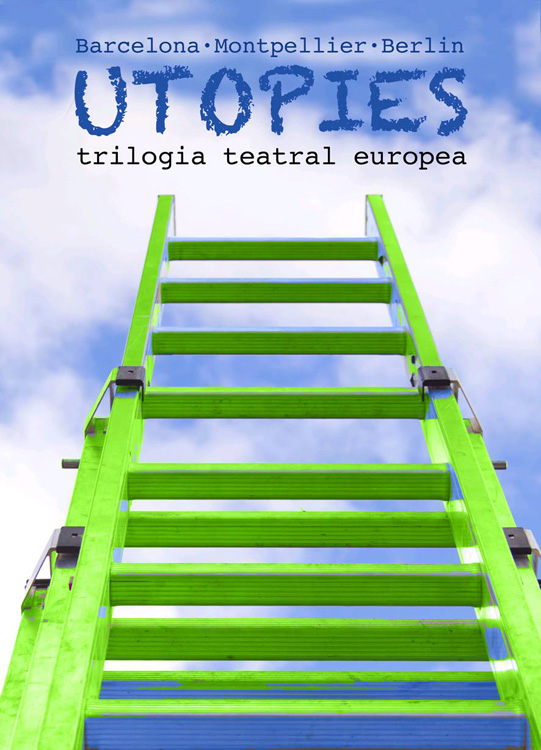
    According to the European Commission,cross-border mobility schemes for young job-seekers” are essential to reduce youth unemployment. Those who ignore the meaning of “cross-border mobility schemes” could have gone last Tuesday to the Greek theatre festival in Barcelona to get a fresh and disruptive definition.

    (more…)

  • “Mileuristas” forever. Are 1000€ per person the magic solution to youth unemployment?


    A few years ago in Spain, the generation of young people entering the workplace was named “mileuristas.” Since then, all over Europe, youth have had to move between temporary contracts and earn no more than a thousand euros a month. The last decisions taken by the European Council on June 28 might make us think that the young Europeans will be condemned to be “mileuristas” in all aspects of their lives, even to escape from unemployment.

    (more…)

  • I am an education entrepreneur. I work in a garage near you.

    Education_Chalkboard

    The changes we are envisioning for the classroom may take place at this very moment, in a garage near us, and no longer in the Ministry of Education offices.

    The notion of “education entrepreneur” challenges our understanding of an education system, ruled by core curriculum standards and a cohort of dedicated civil servants that decide on behalf of the teachers, students and families what is good to be taught in the classroom and how it should be taught.

    In recent years, we have seen acclaimed professors jumping from their “academic pedestal” and into to the start-up world. Udacity – one of the reference points for MOOCs –was cofounded by a research professor at Stanford University. So was Coursera. We could read these stories as fairy tales where the professor we once knew was almost magically transformed into a CEO. But fairy tales aren’t real.

    (more…)

  • When formal education turns non-formal: How big is the hole in the wall?

    Hole in the Wall Project in India
    Hole in the Wall Project in India – photo by Philippe Tarbouriech


    During a vision workshop held in Seville a couple of weeks ago, we had a chance to reflect upon the future of schools at the horizon 2030. Among the many topics that were addressed, two retained my attention: the degree of learner autonomy and the role of informal / non-formal education in the overall learning process. For the sake of reflection, we were asked to think creatively about the learner’s behaviour in a fully autonomous situation and in a totally informal/non-formal educative environment.

    (more…)